Table of Contents
Learn how to farm xStocks xPoints the easiest route, but not necessarily the most capital-efficient one.
Most xStocks farmers simply buy tokenized equities and hold them for the base multiplier. WRONG!
Pendle YT, X Layer liquidity pools and lending loops can potentially generate substantially more xPoints per dollar. Each strategy, however, introduces a different combination of expiration, liquidation, liquidity and smart-contract risk.
This guide explains where to acquire the required assets, where to deposit them and how to exit each position.
Important: xPoints are live, but xStocks has not confirmed a native token, an airdrop or a conversion rate. Treat points as speculative rewards, not guaranteed future value.
What Are xStocks?
xStocks are blockchain-based instruments that track stocks and ETFs. Each product is collateralized 1:1 by the corresponding underlying security and can move between supported wallets, exchanges and DeFi protocols.
Legally, an xStock is a tracker certificate rather than direct ownership of the underlying share. Holders receive economic exposure but no shareholder voting rights. Dividends and stock splits are reflected through balance adjustments. Learn how xStocks work.
The xPoints program rewards onchain participation involving xStocks. Holding or trading xStocks inside Kraken does not currently earn points; assets must be used onchain. Kraken xPoints FAQ.
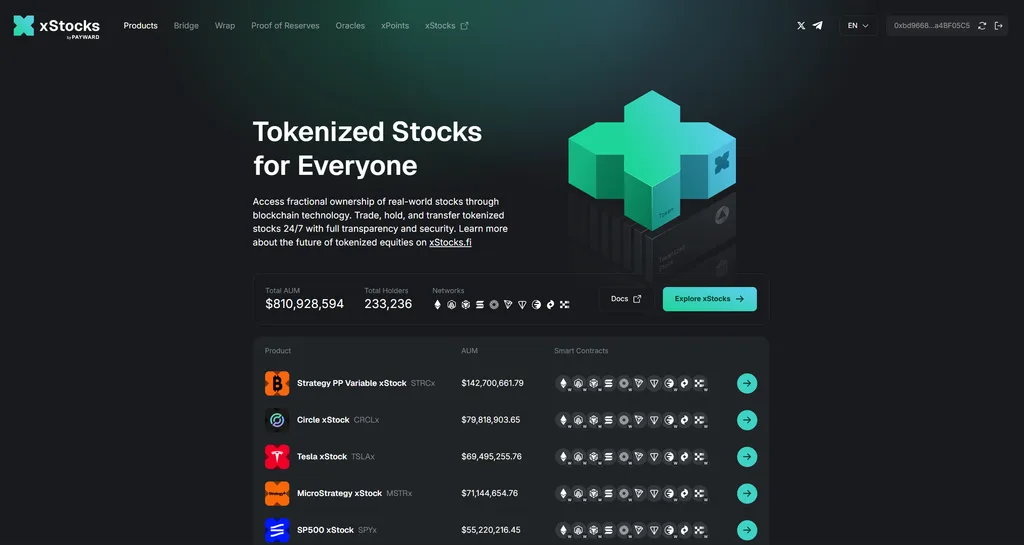
Strategy Comparison
| Strategy | Capital efficiency | Main risk | Best for |
|---|---|---|---|
| Hold xStocks | Low | Stock-price exposure | Beginners |
| Lend xStocks | Medium | Protocol and utilization risk | Passive farmers |
| X Layer LP | High | Range and impermanent-loss risk | Active LPs |
| Jupiter loop | Very high | Liquidation and borrow-rate risk | Experienced DeFi users |
| Pendle YT | Very high | YT expires at zero | Smaller portfolios |
The displayed multipliers and eligible integrations can change. Confirm them on the official xStocks dashboard before committing capital.
Step 1: Register and Activate the Boost
- Open the Airdrops.io xStocks page and follow the points-program link.
- Connect every EVM and Solana wallet that you plan to use.
- Link the required social accounts.
- Confirm that the permanent referral boost appears on your dashboard. (20%)
- Bookmark the exact domain:
defi.xstocks.fi. Avoid similar-looking domains.
Route One: Buy Pendle YT STRCx
This is the most capital-efficient route for smaller wallets, but it is also the easiest to misunderstand.
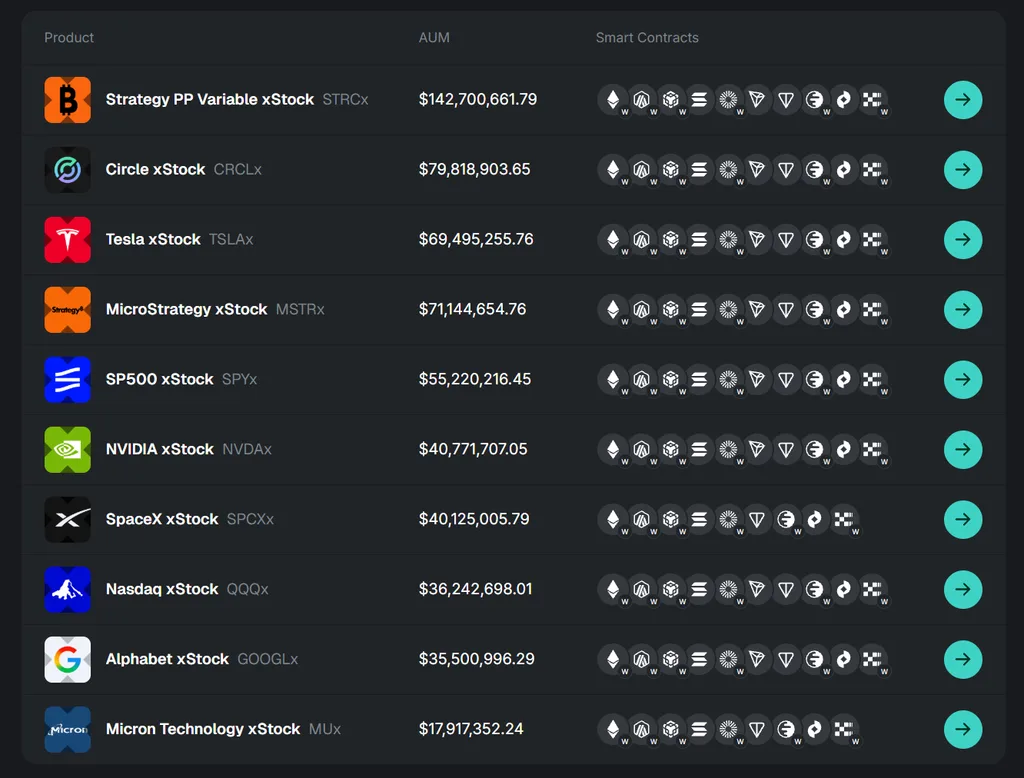
Pendle separates STRCx into:
- PT: the principal component, redeemable for the underlying asset at maturity.
- YT: the right to receive the yield and points generated by one unit of the underlying asset until maturity.
One YT can cost considerably less than one STRCx while retaining exposure to its yield and points. The trade-off is that YT becomes worthless at maturity. Pendle also applies a 3% fee to yield and points earned through YT. Pendle points documentation.
How to Enter
- Prepare an EVM wallet with USDC and a small amount of ETH for gas.
- Open the verified Pendle STRCx market.
- Select the YT tab.
- Enter the amount of USDC you want to use.
- Check the expiry date, implied APY, price impact and expected YT received.
- Approve the transaction and buy YT STRCx.
- Verify that the position appears in your Pendle portfolio and xPoints dashboard.
Avoid deploying the entire position at once. YT pricing can reprice sharply as demand, remaining maturity and expected rewards change. Dividing the position into several entries reduces timing risk.
Dividend and Yield Rule
STRCx uses Pendle’s discrete-yield system. Rewards are calculated according to how long the position was held, and the user must still own the YT when the distribution occurs.
Buying one day before a payout does not capture the entire period’s yield. Selling before the payout forfeits the yield accumulated for that period, although xPoints continue accruing while the position is held. Pendle discrete-yield rules.
How to Exit
- Open the same Pendle market.
- Switch the trade direction from YT STRCx to USDC.
- Review liquidity and price impact.
- Sell before maturity if the remaining market value justifies the transaction.
- Claim any available yield from the Pendle dashboard.
- Do not hold YT past maturity expecting principal repayment: YT expires at zero.
A community case study bought 39.4681 YT STRCx for $238.73 and projected roughly 1.4 million xPoints under the multipliers active at that moment. This was a historical wallet-specific calculation, not a reproducible return estimate. The STRCx implied APY subsequently moved from approximately 32% to 20.5% and then back toward 27%, demonstrating how quickly entry conditions can change.
Route Two: X Layer Liquidity Campaign
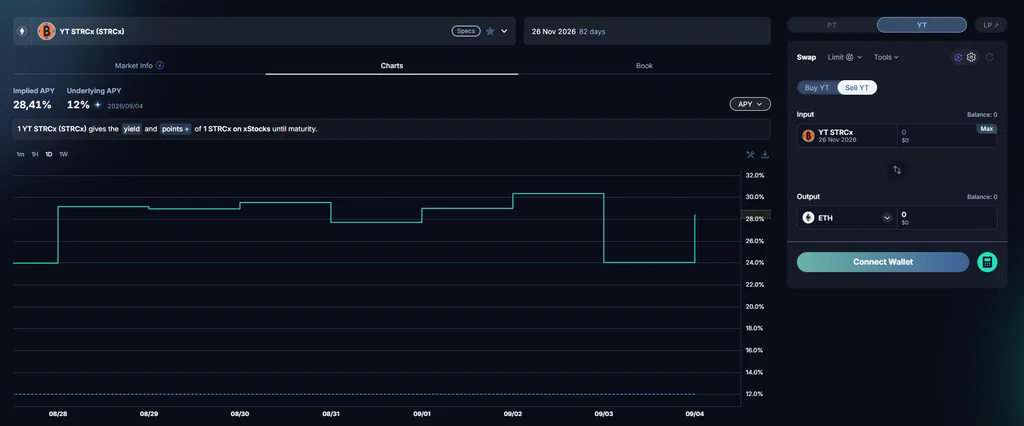
OKX Wallet currently offers two incentives for selected xStocks/USDG liquidity pools:
- A share of a $200,000 reward pool until September 7 at 15:00 UTC+8.
- An additional 25% xPoints boost until September 20.
Liquidity must be deposited through the official campaign page. Positions created directly through Uniswap or another interface do not qualify for the campaign reward pool. Official OKX campaign.
How to Enter
- Install or open OKX Wallet.
- Add X Layer and keep a small amount of OKB for gas. OKB is the network’s native gas token.
- Use the X Layer bridge directory to move USDG, USDC or USDT to X Layer.
- Open the OKX token interface and purchase an xStock currently eligible for the campaign.
- Return to the campaign page.
- Select the matching xStock/USDG pool.
- Deposit a small test amount first.
- Confirm that the position is shown as eligible before adding the remaining capital.
Eligible pools can change. Use the live campaign page rather than relying on an old list.
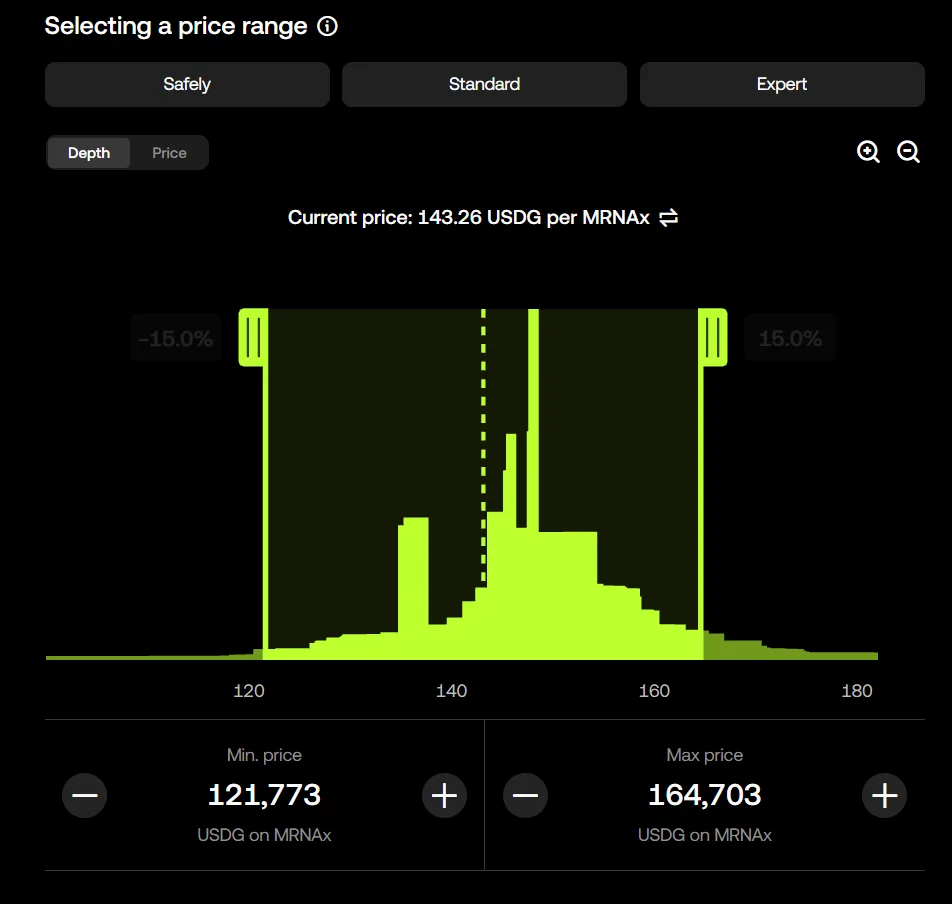
Choosing a Range
A normal concentrated-liquidity position contains both xStock and USDG and earns fees while the price remains inside the selected range.
Advanced users may create a stock-heavy, single-sided position by placing the range away from the current price. This can preserve the xStock quantity under specific conditions, but the position may stop earning trading fees and can convert into the other asset if the price crosses the range.
Do not use a narrow or single-sided range unless you understand Uniswap V3 liquidity mechanics.
How to Exit
- Open the campaign page and select your active position.
- Remove liquidity and collect outstanding fees.
- Swap the xStock and USDG into the asset you want to keep.
- Leave enough OKB for the final transactions.
- Bridge the remaining assets away from X Layer if required.
Route Three: Jupiter Lending and Looping
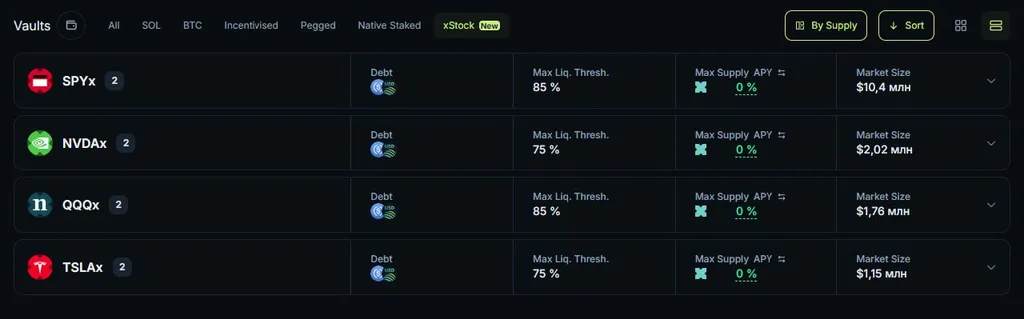
Jupiter Lend lets users deposit eligible xStocks as collateral, borrow stablecoins and optionally purchase more of the same xStock.
Its Multiply feature automates this recursive process in one transaction. Leverage increases point-generating exposure but also increases losses and liquidation risk. Jupiter Multiply documentation.
How to Enter
- Fund a Solana wallet with USDC and a small amount of SOL for fees.
- Buy an eligible xStock through Jupiter, or purchase it through Kraken and withdraw it to Solana.
- Open the Jupiter xStocks lending interface.
- Select the vault using your xStock as collateral and a stablecoin as debt.
- Deposit the xStock.
- For the safer route, stop after supplying and earn the lending multiplier.
- For additional exposure, open Multiply and select a conservative leverage level.
- Review the liquidation threshold, borrow APY, oracle price and position health before confirming.
At a 50% debt-to-collateral ratio, recursive looping creates approximately 2x gross exposure:
Gross exposure = Net capital ÷ (1 − LTV)
If lending receives a 5x points weight, 2x gross exposure theoretically produces 10x weighted exposure per dollar of net capital. This only holds if the full supplied balance remains eligible and the multiplier does not change.
At roughly 28.6% LTV, gross exposure reaches approximately 1.4x. Combined with a 5x lending multiplier, that theoretically matches a 7x LP multiplier.
These calculations exclude borrowing costs, swap fees, slippage and liquidation losses.
I KNOW, I KNOW, THIS A LITTLE MINDBLOWING…
Position Management and Exit
- Monitor position health and borrow APY regularly.
- Avoid using the maximum available leverage.
- Add collateral or use Unwind if the position approaches its liquidation threshold.
- To exit fully, unwind enough collateral to repay all stablecoin debt.
- Withdraw the remaining xStock.
- Do not burn or transfer the Position NFT while the position is active.
Jupiter can partially liquidate collateral when the debt-to-collateral ratio crosses the vault’s current threshold. Risk parameters and interest rates are dynamic.
Optional Delta Hedge
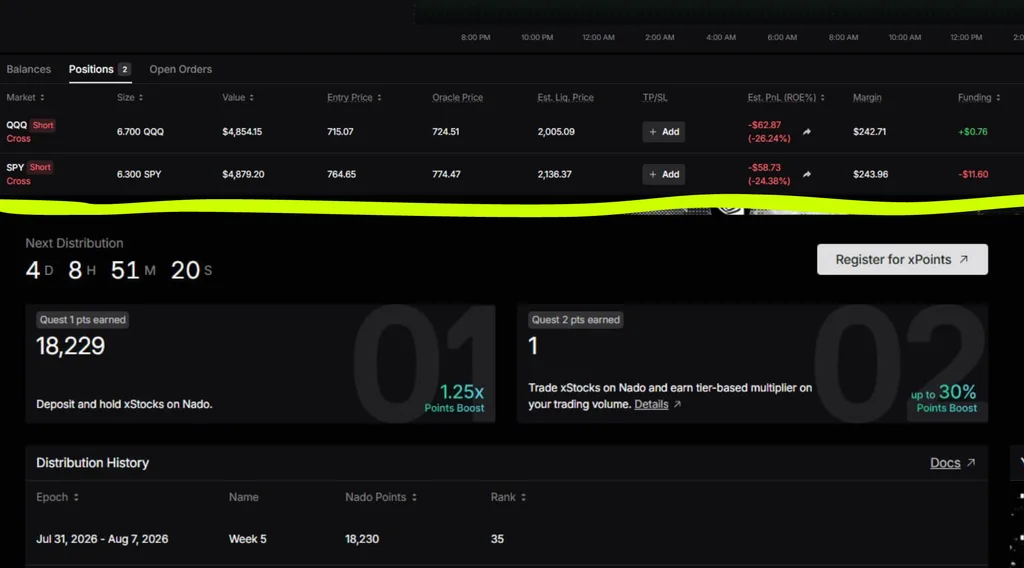
Farmers who do not want directional stock exposure can short a matching stock perpetual on a liquid derivatives venue.
For example, a $1,000 long xStock position can be partially hedged with approximately $1,000 of matching short exposure.
This reduces directional delta but does not remove:
- Funding-rate and basis risk
- Perpetual-position liquidation risk
- xStock issuer and custodian risk
- Smart-contract and oracle risk
- Bridge and liquidity risk
- Changes to xPoints multipliers
A hedged position is not a risk-free position.
Why Nado Is Not the Primary Route
Nado can still be useful for users who already trade there or want exposure to its separate reward program. For pure xPoints farming, however, basic spot holding has historically received a lower effective weight than lending or liquidity provision.
Opening trades only to generate points can also create spread, funding and execution costs. Use Nado when the second reward stream or actual trading utility justifies those costs, not merely because it supports xStocks.
Final Strategy
For a smaller portfolio, staggered YT STRCx entries offer the strongest points exposure per dollar, provided the user accepts that YT expires at zero.
For an active portfolio, the temporary X Layer campaign adds the clearest near-term external reward, but liquidity ranges require management.
For experienced DeFi users, a conservative Jupiter loop may outperform passive LP farming on weighted exposure. It also carries the most direct liquidation and rate risk.
The important distinction is simple: xPoints are an active participation score, not a guaranteed claim on a future token. Calculate the real cost of every point before increasing leverage.
This article is for educational purposes only and does not constitute financial advice. xStocks are unavailable to U.S. persons and may be restricted in other jurisdictions. Only use official links and never deposit more than you can afford to lose.
