Table of Contents
Crypto casino airdrops can look like normal reward campaigns.
They use familiar words: points, XP, quests, leaderboards, early users, bonuses, referrals and token rewards. For airdrop farmers, that sounds simple. Complete the tasks, build activity, improve eligibility and wait for the reward.
But casino airdrops are not always the same as normal crypto airdrops.
A standard airdrop may ask users to connect a wallet, test a product, bridge assets, join a community or complete social tasks. A casino-related campaign can add another layer: deposits, wagering, bonus terms, KYC checks and withdrawal rules.
That changes the risk.
If a campaign only asks for community activity, the main concerns are usually phishing, fake links, wallet permissions and wasted time. If a campaign asks users to deposit funds or generate betting volume, it becomes a real-money decision.
That does not mean every crypto casino airdrop is unsafe. Some campaigns are simple reward programs. Others may be useful for users who already understand casino risk and treat the activity carefully.
But the first question should not be “How big is the reward?”
The first question should be:
Can I withdraw if this campaign actually works?
Why Casino Airdrops Feel Different From Normal Airdrops
Airdrop farmers are used to early opportunities.
They test products before the crowd. They complete quests. They track points. They compare categories like DeFi, social apps, gaming and gaming airdrops to find campaigns before they become crowded.
Casino airdrops can fit into that same mindset.
They may offer tokens, points, cashback, wager-to-earn rewards, sportsbook campaigns, VIP-style incentives or leaderboard prizes. That can look attractive because the user sees a clear reward path.
The difference is the cost of participation.
A normal quest may cost time.
A casino campaign may cost money.
Once a user has to deposit, wager or claim a bonus with conditions attached, the campaign should be treated less like a free airdrop and more like a gambling product with a reward layer on top.
Not Every Casino Airdrop Has the Same Risk
The risk depends on what the campaign asks the user to do.
Some casino airdrops are light and community-based. Others move into real-money activity quickly. That difference should decide how careful a user needs to be.
Campaign type | Typical requirement | Risk level |
|---|---|---|
Social quest | Follow, join, verify, complete simple tasks | Lower |
XP campaign | Earn points through platform or community actions | Low to medium |
Deposit campaign | Add funds to activate rewards | Medium |
Wagering campaign | Bet volume to earn points or rank | Higher |
Leaderboard race | Compete through activity or wagered volume | Higher |
Bonus-linked campaign | Claim rewards tied to wagering or cashout rules | Higher |
The key difference is whether the user risks money to qualify.
A social quest can still be risky if links are fake or wallet permissions are malicious. But a deposit-based or wagering-based campaign adds casino-side risk too.
At that point, users need to check both sides.
Is the airdrop real?
And is the casino safe enough to use with real money?
Scam Checks Still Come First
Before thinking about wagering, bonuses or withdrawals, users should confirm that the campaign is real.
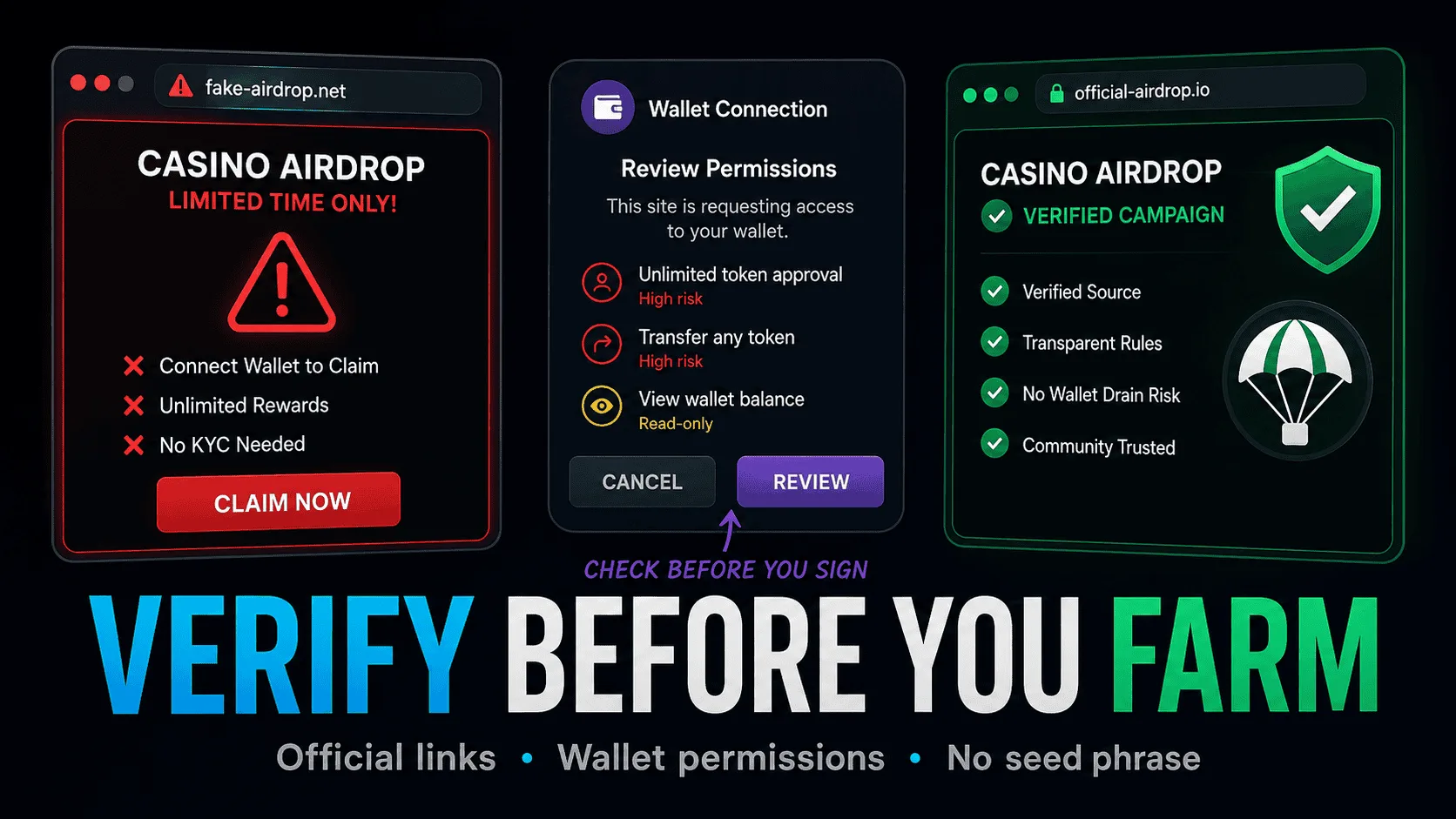
Casino airdrops can be copied by fake accounts, fake websites and fake claim pages. A scam campaign may use the same name, similar graphics, copied social posts or fake urgency to get users to connect wallets.
The basic checks still matter:
Use official links.
Avoid seed phrase requests.
Check wallet permissions.
Do not sign unclear transactions.
Be careful with urgent claim timers.
Compare the campaign with known official channels.
Airdrops.io already explains the broader warning signs in its guide on how to tell if a crypto airdrop is a scam. For casino campaigns, that first scam check is only step one. After the campaign looks legitimate, users still need to judge the casino rules, deposit exposure and withdrawal path.
A real campaign can still carry real gambling risk.
When Farming Becomes Gambling Exposure
The word “free” can be misleading in casino campaigns.
A reward may be marketed like an airdrop, but the route to qualify may require deposits, bets or bonus activity. A leaderboard may look like a points game, but climbing it usually means more volume.
This is where the farming mindset can become dangerous.
Airdrop farmers often think in tasks: complete the quest, earn points, improve eligibility and repeat the action. That logic works well in many crypto campaigns. In casino environments, it can push users to keep betting because they are close to another reward tier.
The user may stop asking, “Is this bet reasonable?”
Instead, the question becomes, “Does this help my eligibility?”
That shift matters.
When betting volume becomes a farming task, losses can start to feel like campaign costs. For disciplined users with strict limits, that may be controlled. For others, it can become a quiet way to ignore real financial risk.
That is where limits matter.
Before starting, users should decide how much they can lose, when they will stop and whether the campaign is still worth it after a loss. These decisions should happen before the first deposit, not during a hot streak or after a bad session.
For users who need a more structured approach, responsible gambling limits for crypto players can help define when a campaign has moved from controlled testing into financial pressure.
The Withdrawal Question Comes Before the Reward
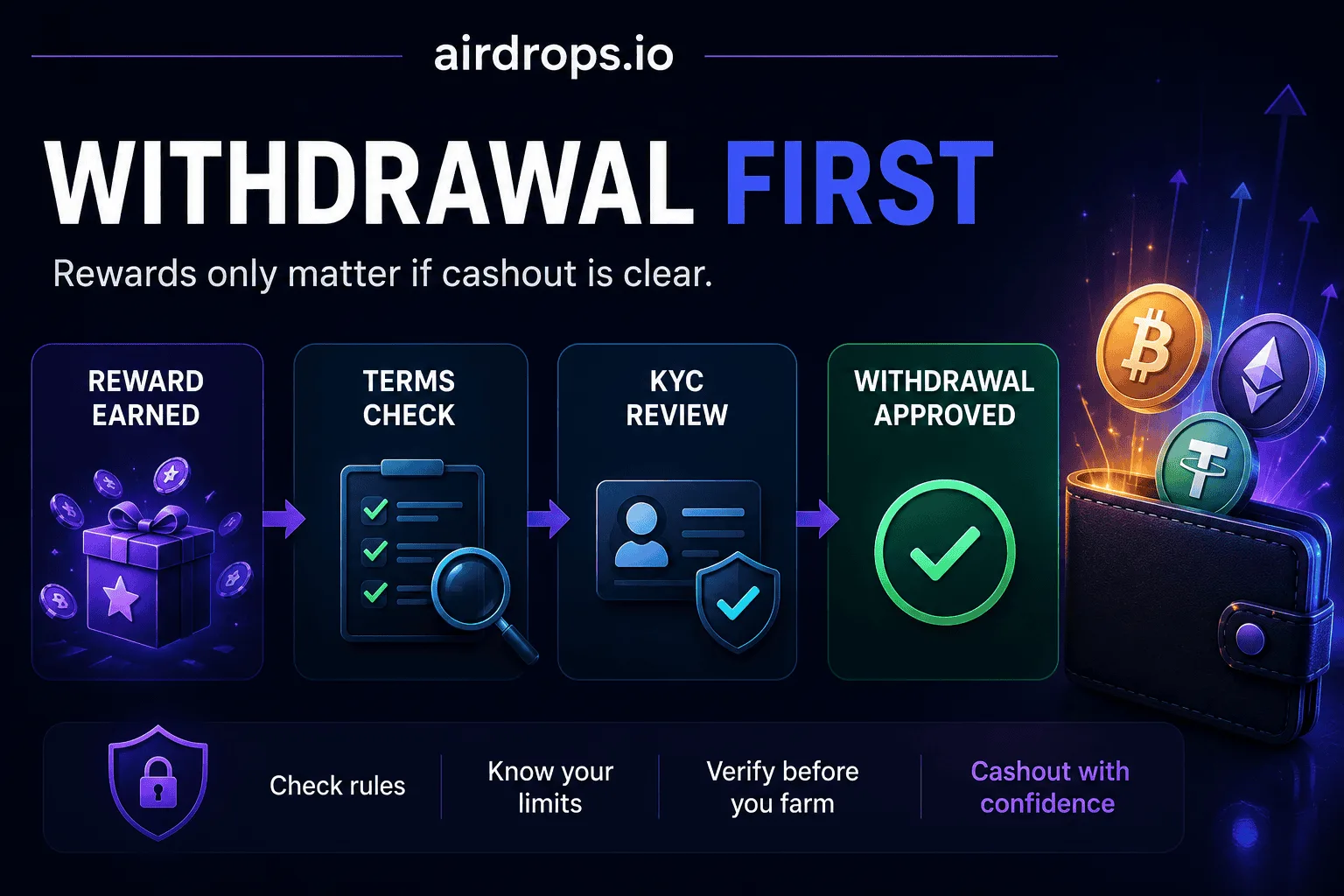
A casino reward has limited value if the user cannot withdraw clearly.
This is where casino airdrops are different from many other campaigns. A normal airdrop user may worry about fake claims, wallet drains, malicious signatures or unclear eligibility. A casino airdrop user has to check all of that, plus the cashout path.
Before joining a deposit- or wagering-based campaign, users should ask:
What is the minimum withdrawal?
Which coins and networks are supported?
Can bonuses lock the balance?
Can KYC appear before cashout?
Are country restrictions clear?
Can the casino delay payout for review?
Are wallet ownership checks possible?
This is where research from sources like CasinoIndex, which looks closely at payout behavior, verification timing and real-money risk, becomes useful. Casino airdrops are not truly tested when the user signs up. They are tested when the user tries to move value out.
A reward that cannot be withdrawn clearly is not real value.
It is only a number inside the platform.
Casino Airdrop Checklist Before You Deposit
Before sending funds to a casino-related campaign, use a simple checklist.
Check | Why it matters |
|---|---|
Official source | Fake campaigns often copy real branding. |
Wallet safety | A separate wallet reduces exposure. |
Deposit requirement | If funds are required, the campaign is no longer free. |
Wagering rule | Betting volume can create losses. |
Bonus terms | Max cashout, max bet and game restrictions can reduce value. |
Withdrawal rules | Rewards matter only if cashout is clear. |
KYC policy | Verification may appear after a win or withdrawal request. |
Country restrictions | Restricted users may lose access or rewards. |
Support access | Problems usually matter most when money is involved. |
This checklist is not just for show.
The value comes from connecting signals. One unclear rule may be manageable. Several unclear rules together create a bigger problem.
For example, a campaign that requires a deposit, has vague wagering rules, gives little KYC information and does not explain withdrawals should be treated carefully.
The more money involved, the more clarity users should demand.
Users who want to understand the cashout side before sending funds should review casino withdrawal checks before depositing, especially when a campaign includes wagering, bonus rules or manual approval steps.
Bonus Terms Often Decide the Real Value
Casino bonuses can look simple.
Deposit $50, get $50.
Earn cashback.
Claim free spins.
Join a leaderboard.
Receive token rewards.
The real value depends on the rules behind the offer.
A bonus may include wagering requirements, max bet limits, max cashout rules, expiry windows, restricted games, withdrawal locks or bonus-abuse clauses. Those details can change the value completely.
A smaller reward with clear terms may be safer than a larger reward with unclear conditions.
Airdrop farmers already understand this in other areas. A large token allocation means little if vesting is harsh, liquidity is weak or eligibility is unclear.
Casino rewards work the same way.
The headline number gets attention. The terms decide whether the reward is useful.
KYC and Wallet Rules Can Appear at the Worst Time
Bonus rules are only one part of the cashout path.
Verification and wallet checks can matter just as much.
Crypto users often prefer low-friction platforms. That is understandable. Nobody wants to upload documents for every campaign or small reward.
But casino platforms may apply checks later, especially when funds leave the account.
A platform may allow fast signup and quick deposits, then request verification after a larger win, bonus claim or withdrawal request. That does not automatically mean the operator is acting unfairly. KYC can be part of fraud prevention, restricted-country checks or payment security.
The risk is unclear timing.
Users should be careful when a campaign promotes easy access but gives little detail about verification. The worst experience is not being asked for documents. The worst experience is being surprised by unclear requirements after money is already inside the platform.
Wallet rules matter too.
Some casinos may check wallet ownership, payment consistency, network choice or withdrawal addresses. Wrong-network transfers can also create problems. Sending funds on the wrong chain or using an unsupported token can cause delays or losses.
Before depositing, users should understand the payout path, not only the reward path.
Once these risks are clear, it becomes obvious that casino airdrops need a structured and disciplined testing process, not emotional decisions.
How to Farm Casino Airdrops More Safely
Users who decide to test a casino airdrop should keep the process small and structured.
Do not start with a large deposit just because the campaign looks early. Do not chase a leaderboard if the cost becomes uncomfortable. Do not claim a bonus before reading the rules. Do not connect a main wallet when a separate wallet can reduce exposure.
A safer process looks like this:
- Confirm the official campaign source.
- Use a separate wallet.
- Read the campaign and bonus terms.
- Check deposit and withdrawal limits.
- Start small if deposits are required.
- Avoid high-volatility betting just to generate volume.
- Track deposits, bets, rewards and withdrawals.
- Test a small withdrawal if the platform allows it.
- Stop if the rules become unclear or the campaign feels stressful.
The goal is not to remove all risk. That is impossible once gambling activity is involved.
The goal is to stop a farming opportunity from turning into uncontrolled betting.
When to Skip a Casino Airdrop
Some campaigns are not worth farming.
Skip or reduce exposure when:
- the official source is unclear
- the reward sounds unrealistic
- deposits are required before rules are explained
- wagering terms are vague
- withdrawal rules are missing
- KYC timing is unclear
- country restrictions are hard to find
- support is unreachable
- users report repeated payout issues
A good campaign should still make sense after reading the rules.
If the reward only looks attractive when users ignore deposit risk, wagering risk or withdrawal uncertainty, it may not be worth the time.
Final Thoughts
Crypto casino airdrops can be interesting, but they are not the same as normal free claims.
Some campaigns are simple social quests. Others involve deposits, wagering, bonuses, KYC checks or withdrawal rules. Once those elements appear, users should treat the campaign as real-money risk.
The reward is only one part of the decision.
Before farming, ask better questions.
Is this campaign official?
Is a deposit required?
Is wagering required?
Can I withdraw clearly?
Are bonus terms fair?
Can KYC appear later?
Am I using money I can afford to lose?
That last question matters most.
A good airdrop opportunity should not push users into bad financial decisions. If a casino campaign turns farming into pressure, the safest move is to step back.
Crypto casino airdrops may reward early users.
But withdrawals decide whether the reward has real value.
FAQ
Are crypto casino airdrops really free?
Some are free social or community campaigns. Others require deposits, wagering or bonus activity. If a campaign asks users to deposit or bet, it should be treated as real-money risk.
Are casino token airdrops safe?
They can be legitimate, but users should check official links, wallet permissions, campaign rules, bonus terms, KYC conditions and withdrawal rules before participating.
Do casino airdrops require wagering?
Some do, some do not. Social quests may only require community activity. Wagering-based campaigns may reward users for betting volume, deposits or leaderboard activity.
Why do withdrawals matter in casino airdrops?
A reward has limited value if users cannot withdraw clearly. Withdrawal limits, KYC timing, bonus terms and payout checks decide whether campaign value can actually be realized.
What is the safest way to test a casino airdrop?
Use official links, connect a separate wallet, read the rules, start small if deposits are required, avoid emotional betting and test the withdrawal process before increasing exposure.
